
Managing Aircraft Parts Inventory
Build a more useful inventory picture by balancing service risk, demand patterns, part lifecycle, shelf life, and the cost of holding stock.
01
Inventory is an operational system
Aircraft parts inventory is not simply a warehouse count. It is a live view of what can support the fleet, what is in inspection or repair, what is approaching a shelf-life limit, and what may be unavailable when maintenance needs it.
Useful inventory decisions begin with clean records: accurate part numbers, condition, quantity, location, serial or lot details, and status. Without that foundation, teams can appear well-stocked while still facing an AOG because the available unit is unserviceable, undocumented, or in the wrong place.
02
Segment the risk
Not every line item deserves the same stocking strategy. High-impact rotables, long-lead items, and parts with limited supply may need stronger coverage than common expendables. Usage history, fleet size, maintenance intervals, supplier lead time, and the cost of an aircraft-on-ground event should all influence the target level.
Set review rules that reflect the part’s lifecycle. Serialized assets need movement and repair visibility. Expendables need quantity, lot, and shelf-life discipline. Obsolete or slow-moving stock needs a deliberate disposition path so cash does not remain trapped in unusable inventory.
- Prioritize inventory reviews by operational impact, not only by annual spend.
- Separate available, reserved, quarantined, repairable, and scrapped statuses.
- Use supplier lead time and AOG exposure to set replenishment triggers.
03
Make the data usable
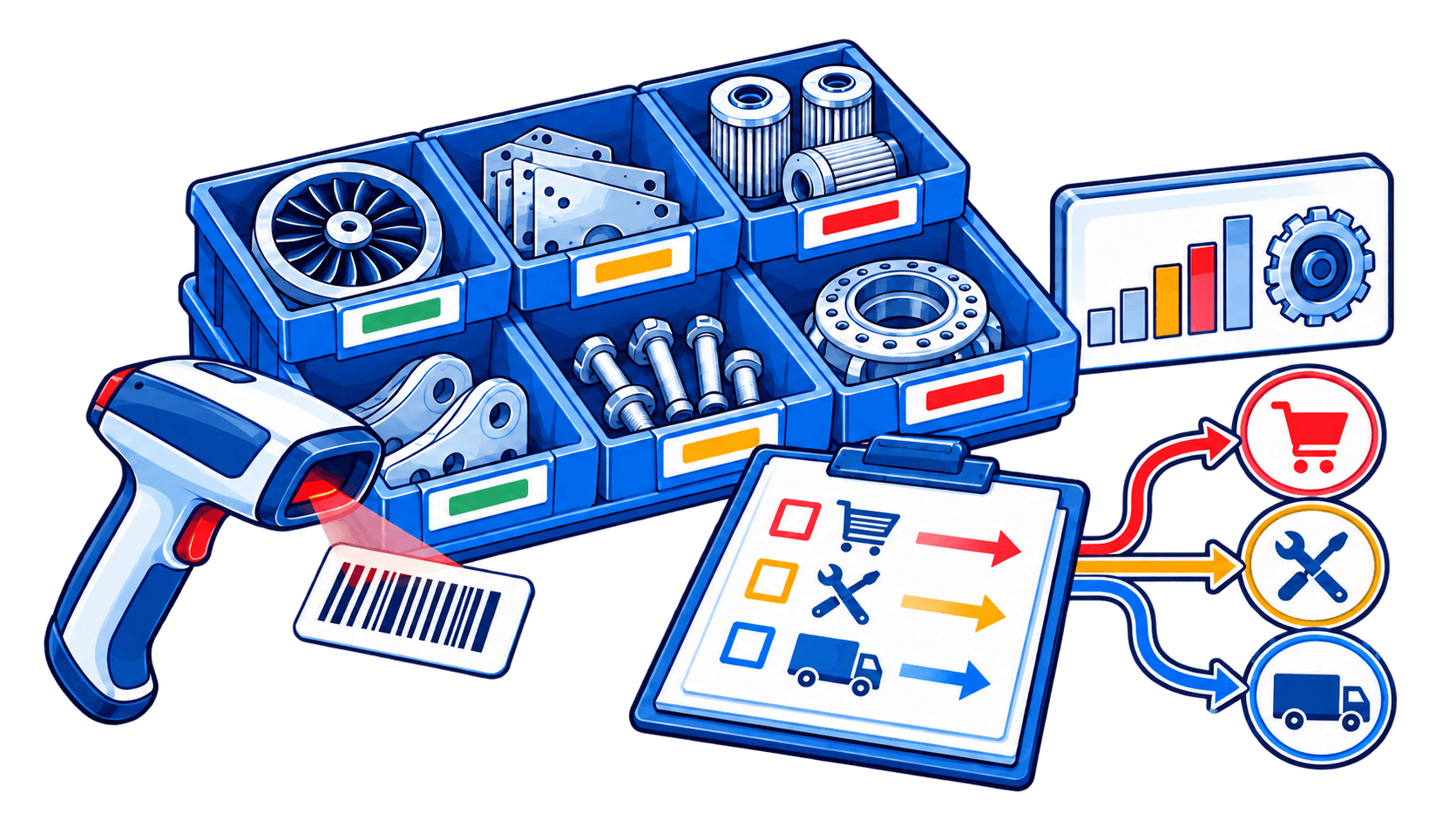
A practical inventory dashboard should help someone make a decision quickly: buy, repair, transfer, reserve, or wait. Pair stock data with open RFQs, repair orders, upcoming maintenance, and supplier commitments so the team sees the full supply picture.
The goal is not to hold every possible part. It is to hold the right coverage for the risks the operation actually carries, then use a responsive sourcing network for the gaps that remain.