Aviation Supply Chain Challenges
Understand the recurring pressure points in aviation sourcing and the habits that make a supply chain more resilient when conditions change.
01
Why aviation supply is different
Aviation supply chains operate under a combination of technical, regulatory, commercial, and operational constraints. A part may be available somewhere in the market but still fail to meet the required condition, documentation, approval basis, delivery window, or end-user restriction.
Supply can also be concentrated among a small number of manufacturers, repair facilities, distributors, and specialist brokers. When demand rises or a program changes, lead times and pricing can move quickly.
02
Common pressure points
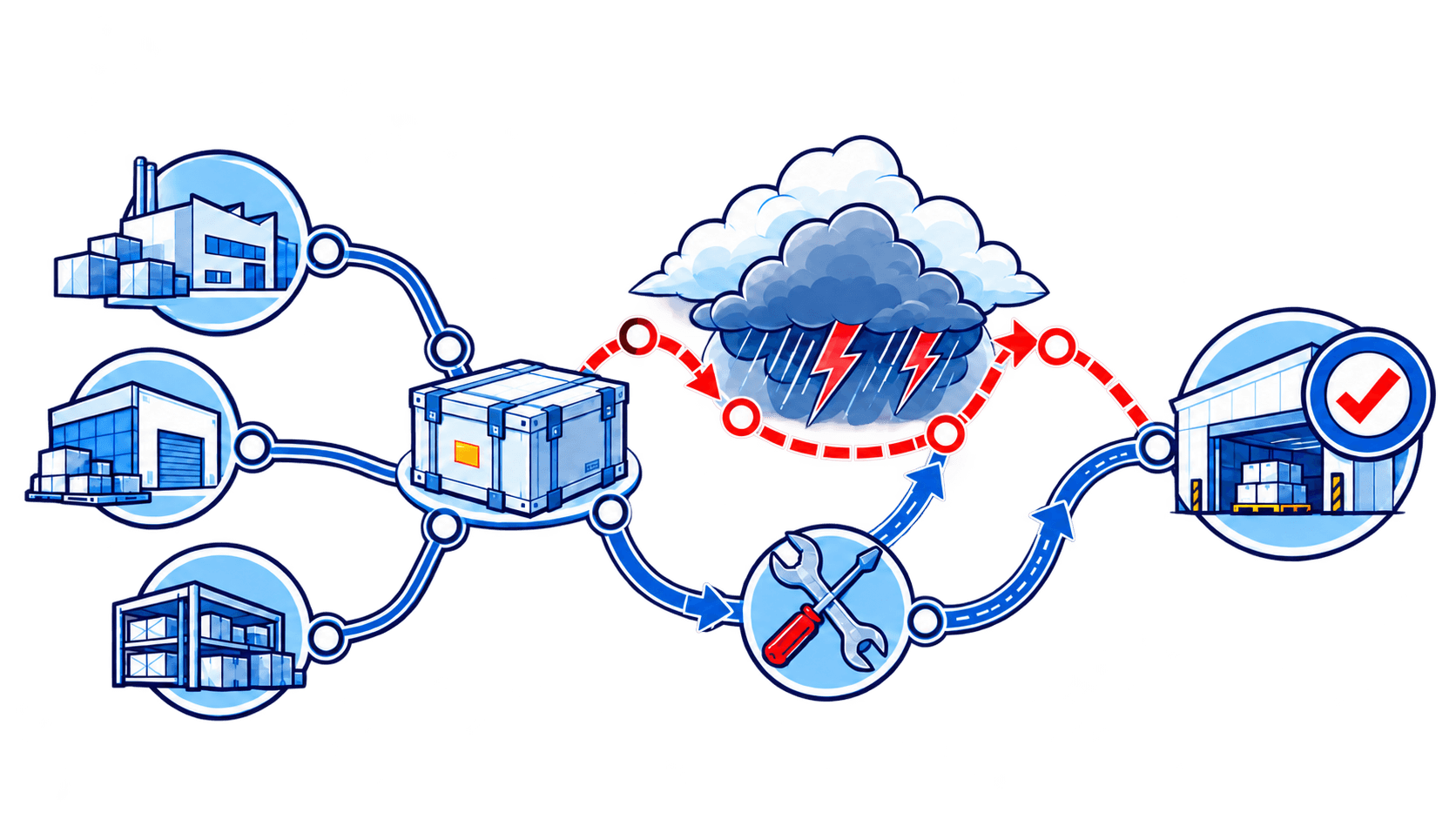
The most visible challenge is shortage, but shortages are only one part of the problem. Obsolescence, repair-capacity constraints, inconsistent records, freight disruption, geopolitical changes, and inaccurate demand signals can all create the same result: a part is needed, but the path to an installable unit is unclear.
The response should be practical rather than reactive. Maintain alternate sourcing paths, keep technical requirements clear, and create enough visibility that teams can distinguish a real shortage from a documentation or planning gap.
- Maintain approved alternate sources and repair options for critical items.
- Track supplier commitments and lead-time changes before they become emergencies.
- Share forecast information where it can improve availability and allocation.
03
Resilience is built before the event
A resilient aviation supply chain is not necessarily the one with the most inventory. It is the one with clear requirements, dependable information, qualified relationships, and multiple ways to recover when the preferred path is unavailable.
Review supply risk during normal operations. Map critical parts, identify single points of failure, and agree on escalation paths before the next urgent requirement arrives.