Understanding Aircraft Part Conditions
A practical guide to the condition codes, paperwork, and inspection questions that shape the value and usability of an aircraft part.
01
Condition is more than a label
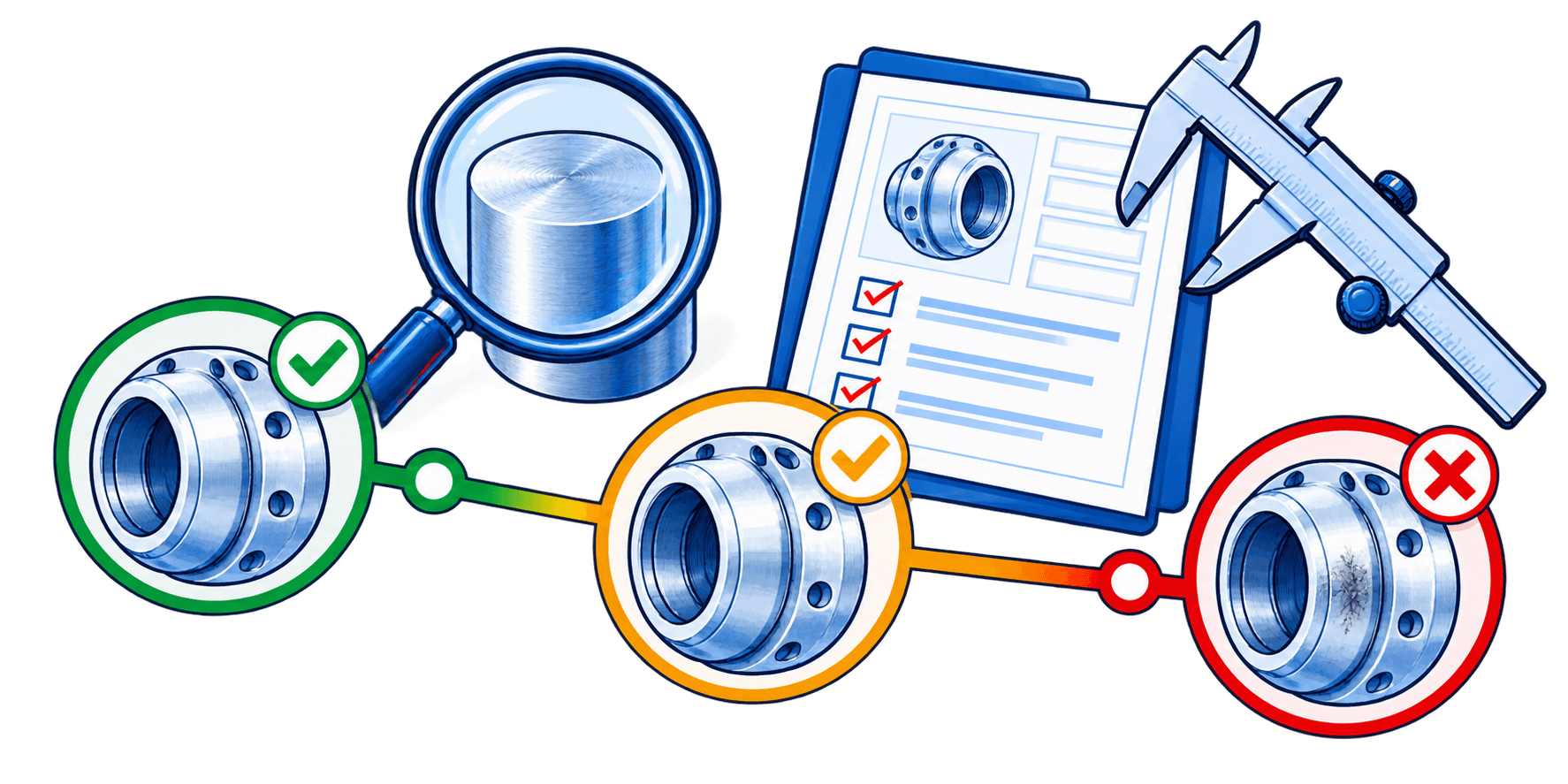
Aircraft parts are commonly described as new, overhauled, repaired, serviceable, inspected, or as removed. These terms are useful shorthand, but they do not tell the whole story. A part’s actual suitability depends on its part number, serial number, life status, modification history, storage conditions, and the records that support it.
The same condition code can represent different commercial value depending on the component and the buyer’s approval basis. A time-controlled unit, for example, needs a clear life record. A hardware item may need material and conformity evidence instead. Start with the operating requirement, then evaluate the condition against it.
02
The records behind the part
A credible quote should make the supporting documentation easy to understand. Typical records can include an authorized release certificate, maintenance or repair documentation, a certificate of conformity, teardown information, trace paperwork, and the current status of any applicable life limits.
Ask whether the paperwork identifies the exact unit being offered. Part number alone is rarely enough for a serialized component. Matching the serial number, release document, and quoted condition is one of the simplest ways to reduce surprises during receiving inspection.
- Confirm the exact part number, dash number, and serial number where applicable.
- Review life-limited, time-controlled, or shelf-life information before purchase.
- Check that the release and trace records match the physical part being offered.
03
A better way to compare offers
When comparing multiple sources, put condition, documentation, lead time, warranty, and total landed cost on the same line. A lower unit price may not be the lower-risk option if it requires additional inspection, missing records, or a longer approval cycle.
Treat condition as a conversation, not a checkbox. The right supplier will explain what is known, what is included, and what still needs to be verified before the part is committed to an aircraft.