
New vs Overhauled Aircraft Parts
Compare new and overhauled components across cost, availability, documentation, warranty, and the operational context that should drive the decision.
01
Two valid paths to an airworthy part
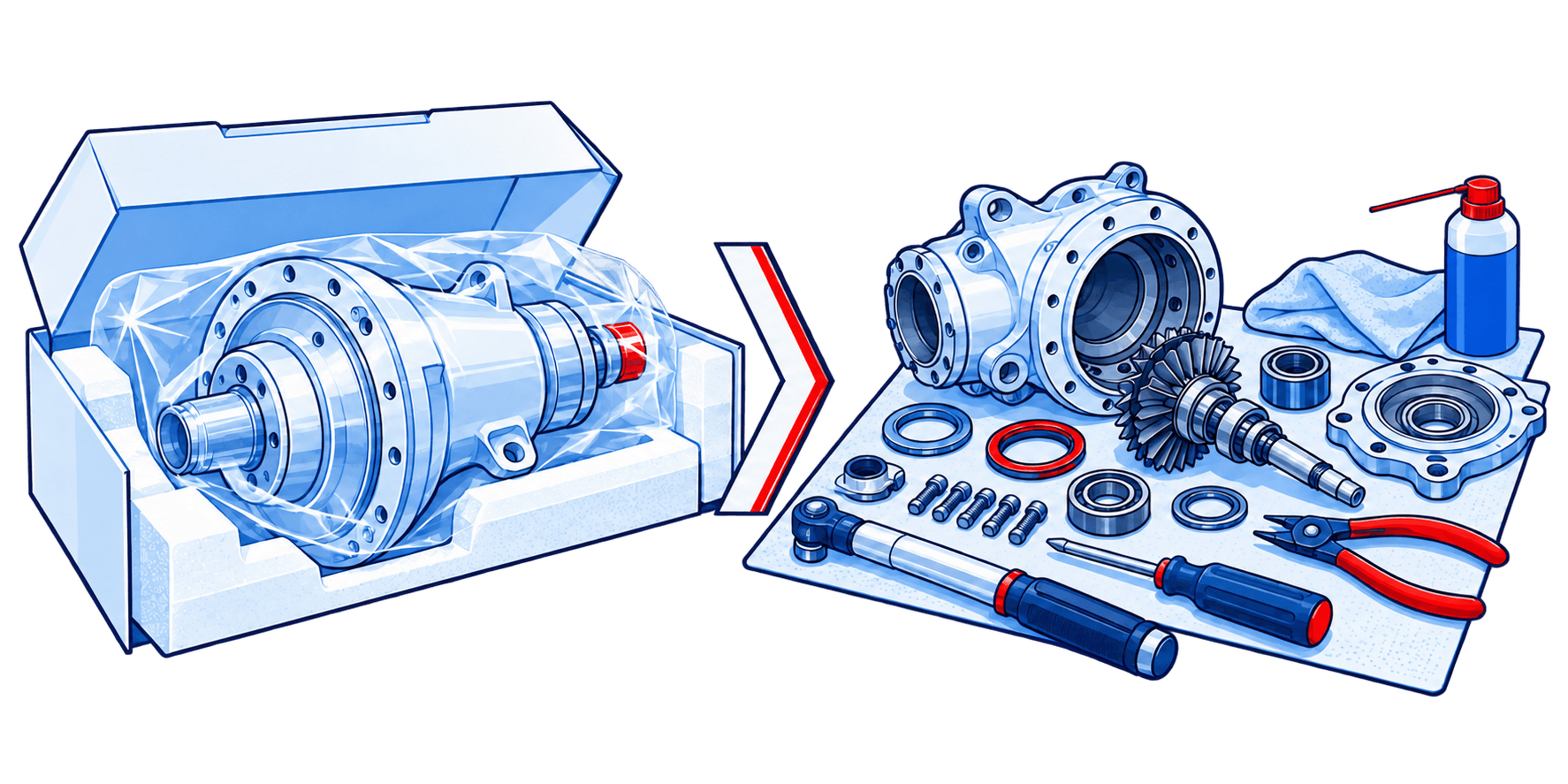
A new part has not previously entered service or has been produced under the applicable manufacturing approval. An overhauled part has been disassembled, inspected, restored or replaced as required, tested, and released by an appropriately approved organization. Both can be useful solutions when the records and approval basis match the installation requirement.
The choice is rarely just “new is better.” Availability, lead time, budget, fleet standardization, and the component’s expected duty cycle can make an overhauled unit the more practical option.
02
Compare the complete offer
Price should be evaluated together with warranty, remaining life, delivery commitment, core or exchange requirements, and the cost of any additional inspection. A new part may command a premium but simplify approval. An overhauled part may deliver strong value, particularly when it is immediately available with complete records.
For an overhauled unit, ask what the shop’s overhaul standard included and whether the documentation identifies replaced parts, test results, and any remaining limitations. The more specific the answers, the easier it is to compare offers responsibly.
- Confirm the exact condition and release status, not just the seller’s headline wording.
- Compare warranty terms, exchange cores, and return conditions.
- Account for lead time and receiving requirements in the total cost.
03
Match the part to the mission
A grounded aircraft, a scheduled maintenance event, and an active AOG situation have different decision windows. When time is critical, a documented overhauled unit that meets the installation need may be the best operational choice. When planning time is available, a new part may make sense for long-term standardization or a high-utilization fleet.
The right answer is the one that satisfies the technical and documentation requirement while protecting the aircraft’s schedule and the maintenance team’s confidence.