
FAA 8130-3 vs EASA Form 1
Understand what these authorized release documents communicate, where acceptance can differ, and which questions to ask before a part moves across borders.
01
What the forms are for
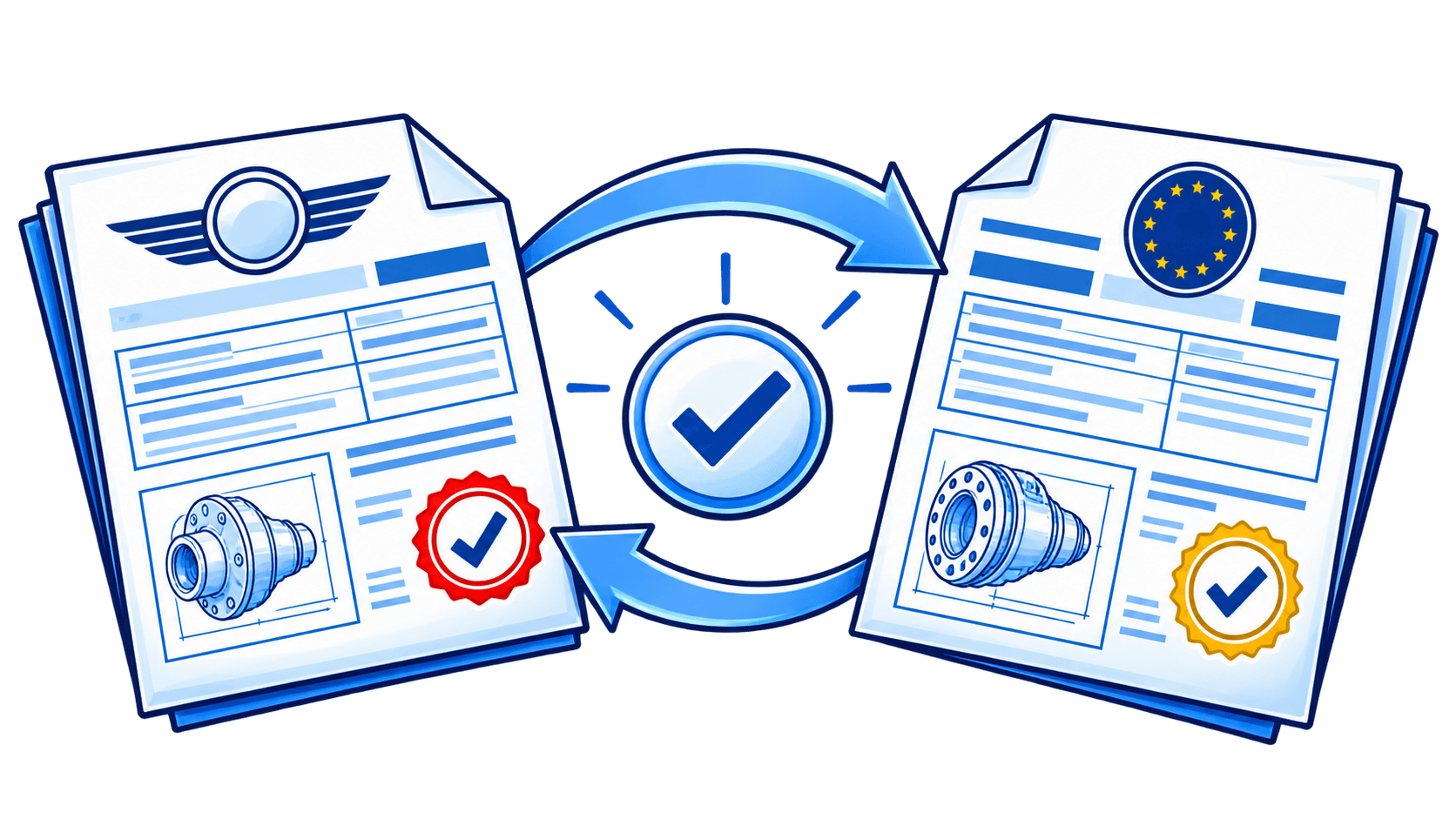
FAA Form 8130-3 and the EASA Form 1 are authorized release documents used to communicate the approval status of an aviation product or component. They are evidence that the issuing organization completed the applicable release process; they are not a replacement for the entire maintenance and traceability history of the part.
The form matters because installation and receiving organizations need confidence that the part was released by an appropriately approved entity. The exact acceptance basis depends on the product, the issuing authority, the bilateral agreements in effect, and the operator or installer’s own procedures.
02
Why acceptance is not automatic
A form that looks complete can still require review. The receiving organization may need to confirm the issuing approval, the work performed, the part identity, and whether the document is acceptable for the intended aircraft and jurisdiction. Component type, work scope, and the route by which a part was transferred can all matter.
The safest approach is to identify the intended end user and acceptance basis before requesting a quote. That allows a supplier to offer the right documentation package instead of treating the form as an afterthought.
- Share the installation or receiving authority’s documentation requirements early.
- Verify that the document identifies the quoted part and the work or release status.
- Escalate unusual, incomplete, or conflicting records for quality review before shipment.
03
The document is one part of the package
An authorized release document should be read alongside trace records, repair or overhaul reports, life-limit information, and any applicable service history. Together, these records create a clearer picture of whether the part can move smoothly through receiving inspection and onto the aircraft.
Regulatory acceptance is ultimately determined by the responsible aviation authority, approved organization, or operator procedure. Use this guide as a starting point for a documentation conversation, not as a substitute for that review.